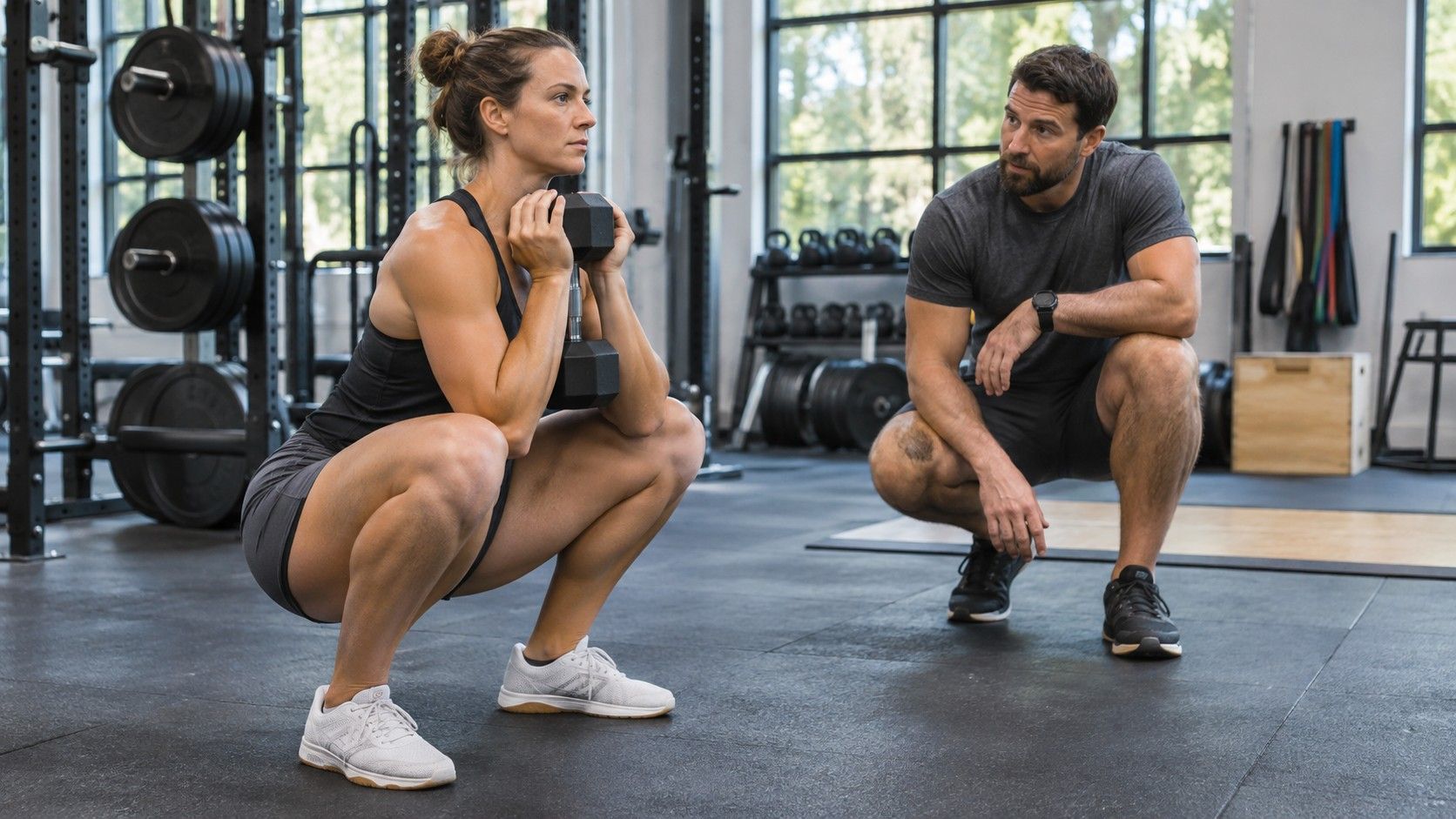
Technique analysis is a sequence of observations and decisions. Before deciding that a lift needs a cue, establish what the athlete is trying to do, whether the setup is appropriate and which part of the movement is creating the problem. For CSCS preparation, practice describing what is visible without inventing a diagnosis or assuming that one cue will solve every variation of the task.
Start with the task and setup
Identify the exercise, its intended purpose and the conditions under which it is performed. A movement used to teach a novice may have a different immediate goal from a loaded variation used by an experienced athlete. The relevant setup includes equipment, space, starting position and any assistance required. If these conditions are wrong, a verbal cue alone may not address the problem.
Check the environment before concentrating on small movement details. A clear training area, appropriate equipment adjustment and a workable spotting arrangement are part of technique instruction. An athlete can understand a cue and still be placed in a poor situation by an unstable bench or a crowded lifting area. In an exam scenario, a basic environmental issue may be more important than selecting an advanced progression.
Use instructions that match the person's experience. A new athlete may need a demonstration and a small number of priorities. An experienced lifter may need a precise reminder about one phase of the movement. Giving both people a long list of anatomical instructions can consume attention without improving the task. The setup should make the intended action understandable before adding demand.
Observe movement without inventing a diagnosis
Describe the observation in specific terms: when it occurs, under what load and whether it repeats. 'The athlete loses the planned trunk position late in the set' is more useful than an unsupported claim about a damaged structure. Observation can guide a coaching adjustment, but it does not automatically identify the medical cause of a movement pattern or establish that a particular tissue is injured.
Look at more than one repetition when it is appropriate and safe. A single unusual repetition may result from a misunderstood instruction, a distraction or fatigue. Compare the pattern with the setup and the athlete's response to an easier task. If pain, concerning symptoms or a known restriction is present, follow the relevant referral and organizational procedures rather than using the exercise as an informal diagnostic test.
Distinguish meaningful control from a demand for identical appearance across all people. Body proportions, exercise variations and the purpose of the task can affect how a movement looks. The question is whether the athlete can perform the intended task appropriately under the stated conditions. This requires a standard that is connected to the exercise and the individual, rather than an aesthetic preference presented as a universal rule.
Choose one useful cue
A cue should direct attention toward an actionable change. Before speaking, decide what you want to improve and why that change matters now. If the athlete's main problem is understanding the start position, a cue about speed at the end of the movement is poorly timed. Select the highest-priority issue and give the athlete an opportunity to respond before adding more information.
Evaluate the cue by its effect. A phrase that works well for one person may confuse another. If the athlete repeats the same problem, consider whether the language is unclear, the task is too difficult or the environment prevents the intended response. Repeating the cue more loudly does not solve those possibilities. A demonstration, a different exercise variation or less demand may provide clearer information.
Keep feedback proportional. Continuous correction after every small variation can make it difficult for the athlete to identify what matters. Allow useful practice when the movement is acceptable, then review the relevant pattern. For exam questions, choose the response that addresses the stated observation without introducing several unrelated changes. This demonstrates a coaching priority instead of a catalogue of terminology.
Match load and progression to control
Progression should follow evidence that the athlete can manage the current task. Load is one variable, but complexity, range, speed and accumulated fatigue can also change the demand. Increasing several variables together makes it harder to identify why performance changed. A measured progression allows the coach to observe the response and retain the purpose of the exercise.
A regression is a practical adjustment, not a punishment. Reducing load or choosing a simpler variation can preserve useful practice when the present task exceeds the athlete's control. Explain the reason in terms of the training objective. If the goal is high-quality skill practice, a technically deteriorating set may not serve it. If the athlete reports pain or unusual symptoms, the decision involves a different concern and may require referral.
Consider the role of fatigue. A movement that is consistent early in a session but deteriorates later may require a change in order, volume or recovery rather than a new cue. Do not treat every problem as a missing instruction. The training plan and the immediate environment can create the conditions for the observation. Good technique reasoning examines those conditions before assuming the athlete simply needs greater concentration.
Practice technique analysis for an exam
Use a structured explanation: identify the task, state the observation, name the immediate priority and choose a response. Then explain what you would check next. This keeps the answer tied to the scenario. It also makes uncertainty visible; a short description may support a coaching adjustment without supporting a claim about the exact biological cause.
When comparing answer options, watch for those that jump beyond the available information. An option may sound knowledgeable because it names a specific disorder, yet be less defensible than a simple setup correction. Another may add load before the basic task is established. Prefer reasoning that follows the evidence and respects the professional role, rather than reasoning that sounds complex.
Alter the practice example after solving it. Change the athlete's experience, remove the fatigue condition or specify that a qualified clinician has supplied a restriction. Explain how the response would change. This is more valuable than memorizing a single visual fault and its usual cue. Technique analysis becomes usable when the candidate can connect a response to the actual task, the athlete and the conditions in which the movement occurs.