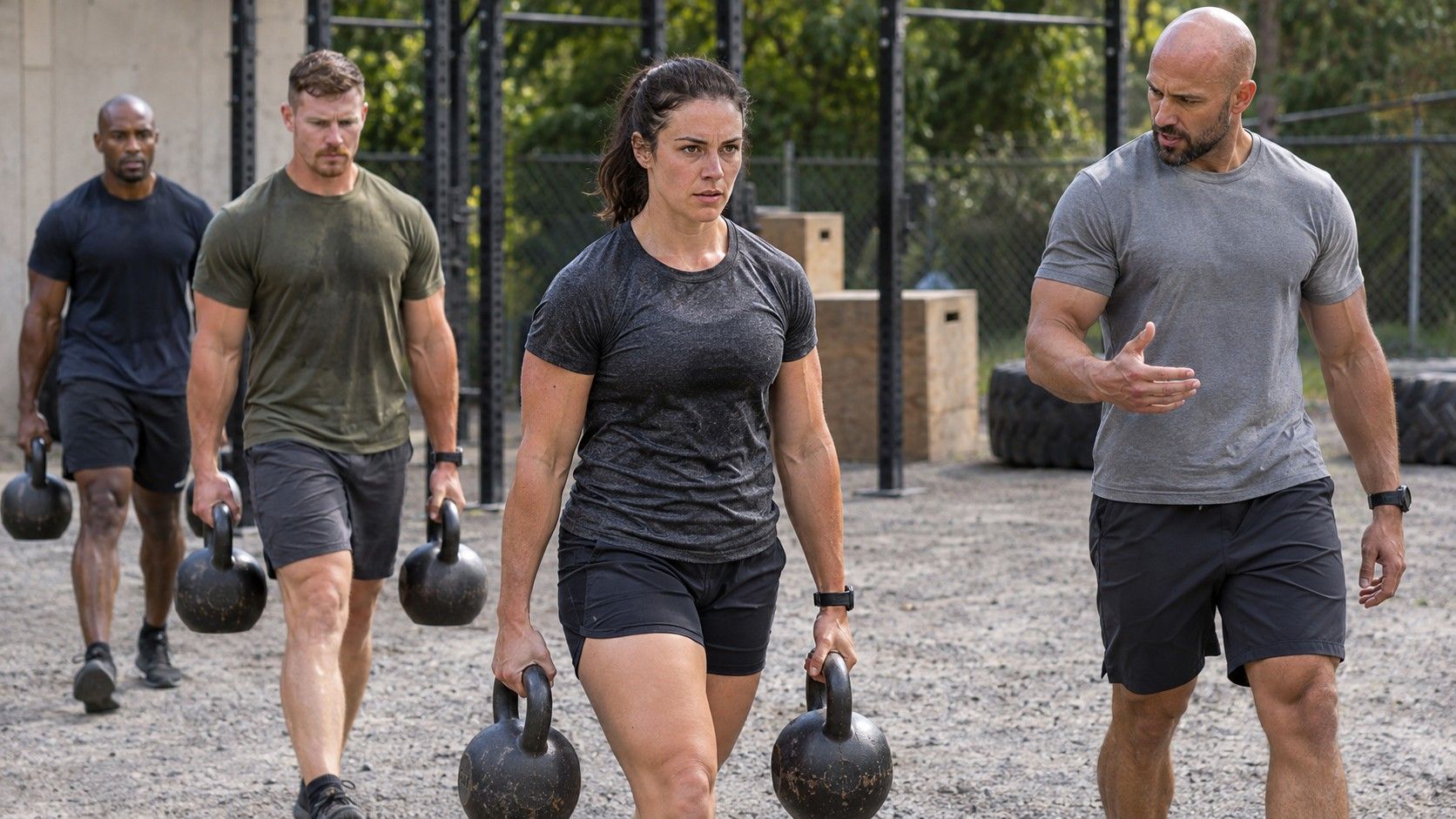
Tactical strength and conditioning focuses on people whose physical demands arise from occupational duties rather than a conventional sport season. TSAC-F is NSCA's Tactical Strength and Conditioning Facilitator credential. It can provide a relevant knowledge framework, but candidates still need to understand the population, organization and practical responsibilities of the work they want to do before selecting a certification pathway.
Define the tactical coaching role
Military personnel, law-enforcement officers, firefighters and other occupational groups can face different task demands and schedules. Even within one organization, roles vary. A person who carries equipment over distance has a different preparation problem from someone whose most demanding task is a short high-force effort. Begin with the actual duties and the environment, rather than assuming that tactical training is simply a harder version of a general fitness class.
The coach's responsibilities depend on the job and organization. A credential does not confer command authority, clinical authority or permission to decide occupational fitness standards independently. The work may require cooperation with supervisors, health professionals and other trainers. Read actual job descriptions to see which credentials, experience and operational familiarity are expected in the setting you want to enter.
Ask how success is evaluated. A test score can matter, but the occupational objective may include dependable readiness, work capacity and the ability to train consistently around duty. A program that maximizes a gym result while disrupting work performance may miss that objective. This broader context explains why tactical preparation includes planning and wellness decisions as well as exercise technique.
Check eligibility and delivery options
Use the current NSCA TSAC-F prerequisites and certification handbook to verify age, education and CPR/AED requirements. Check the documents required and the timing of their submission. Do not assume that the rules match CSCS simply because both credentials come from NSCA. Different eligibility pathways can make one option available now while another requires additional education.
Also distinguish an online preparation course from the examination itself. A course can be delivered online while the exam follows a separate proctoring and scheduling process. Confirm the delivery options currently available for your location and circumstances with NSCA and its testing provider. A search phrase such as 'tactical fitness certification online' does not establish which format an official credential uses today.
Keep the registration decision separate from purchasing study support. A third-party package may prepare candidates without including the exam fee, and the certifier may not require that particular course. Read the terms, verify the official pathway and save the relevant confirmations. This prevents a candidate from completing a course and discovering that additional eligibility or testing steps remain.
Understand the knowledge areas
The official exam outline covers scientific, technical, programming and organizational knowledge relevant to tactical work. Use the current detailed outline to determine coverage. A short web summary can help orient you, but it should not replace the document used to describe the examination. Domain names and emphasis should be checked against the current version before assigning study time.
Connect each area with a job-related question. Exercise science can explain how a duty task draws on different capacities. Technique knowledge helps select and teach an appropriate exercise. Program design must account for disrupted schedules and recovery. Organizational knowledge addresses safe environments, policies and responsibilities. These connections make the material more coherent than a collection of unrelated definitions.
Do not equate familiarity with physical training to complete exam readiness. An experienced participant may know what a demanding session feels like without being able to explain its purpose or adapt it for another person. Conversely, a strong academic background may need more practice with occupational constraints. A diagnostic across several kinds of task will reveal which preparation is needed.
Select preparation that matches your background
Start with a primary reference and the outline, then add resources to address an identified gap. A candidate unfamiliar with anatomy or physiology may need structured instruction before attempting complex scenarios. Someone comfortable with the science may benefit more from varied programming and assessment examples. Buying the largest package first can create substantial reading without resolving the actual weakness.
Use original practice situations that require a decision. For example, explain how an interrupted training week changes the priority of the remaining sessions, or how limited equipment affects exercise selection. State which facts matter and what information is missing. The ability to adapt the reasoning is more useful than memorizing one apparently ideal tactical workout.
Plan study around the same constraints that make tactical training challenging. Shift work and unpredictable duties may require a small reliable study routine rather than long sessions at fixed times. Build a minimum weekly plan, use shorter retrieval blocks and review progress at regular intervals. A schedule that depends on perfect conditions is unlikely to remain useful when work becomes demanding.
Separate a credential from occupational authority
TSAC-F can be one component of professional preparation, but it does not replace an organization's hiring, safety or medical processes. Verify whether the role you want accepts the credential and what additional experience is expected. A candidate may need supervised practice, familiarity with a specific occupational group or other qualifications. Treat those requirements as part of the pathway rather than as obstacles that certification should erase.
Present your status accurately. Completing a preparation course, registering for an exam, passing an exam and receiving certification are distinct events. Use the designation only in accordance with the certifier's rules and after all requirements have been satisfied. Clear descriptions protect both the candidate and the people who rely on their claimed qualifications.
After certification, continue learning from the operational setting and appropriate professional supervision. Keep records of continuing education and the requirements for maintaining the credential. The most useful result is an ability to make better decisions for a defined population within a clear professional role. Collecting a tactical label without understanding those responsibilities does little to establish competence.